
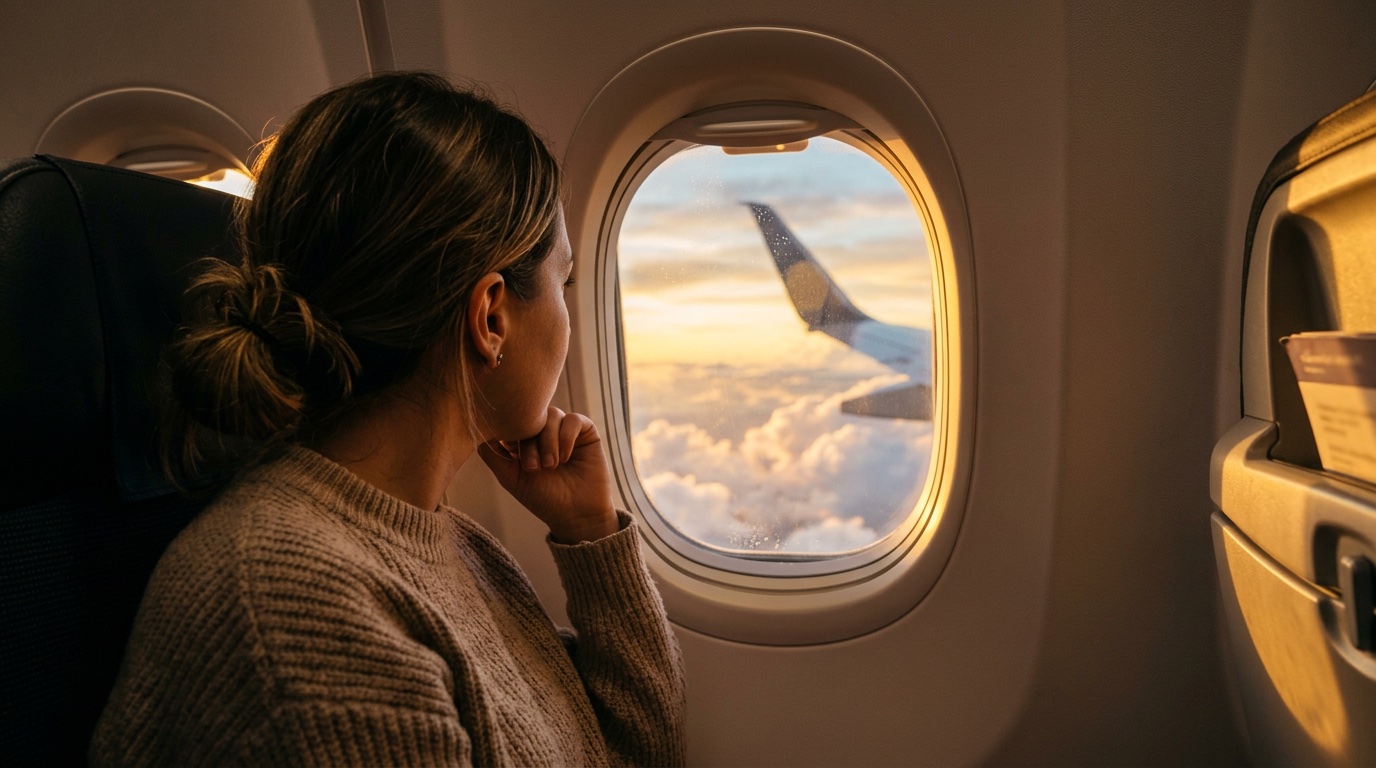
The Psychology Behind Surprise Travel: Why the Unknown Makes Us Happier
Why does a trip you never planned feel more exhilarating than one you spent months researching? Why do surprise travelers consistently report higher satisfaction, more vivid memories, and a deeper sense of joy compared to those who chose every detail themselves? The answer lies not in the destination, but in your brain.
Surprise travel taps into some of the most powerful psychological mechanisms that drive human happiness — from the neurochemistry of novelty to the cognitive relief of surrendering control. In this deep dive, we explore what science tells us about why the unknown does not just excite us — it fundamentally makes us happier.
Dopamine and the Novelty Response
At the core of why surprise travel feels so rewarding is dopamine — the neurotransmitter most closely associated with pleasure, motivation, and reward. But dopamine's role is more nuanced than simply "feeling good." Research published in the journal Neuron by neuroscientists at the Wellcome Trust Centre for Neuroimaging found that the brain's dopamine system responds more strongly to unexpected rewards than to expected ones.
In their landmark study, participants received either predictable or unpredictable positive stimuli while their brain activity was monitored via functional MRI. The results were striking: the ventral striatum — a key region in the brain's reward circuit — showed significantly greater activation when rewards were unexpected. In other words, the same positive experience produces more pleasure when it comes as a surprise.
This has profound implications for travel. When you book a trip to Barcelona, you know exactly what you are getting. You have seen photos, read reviews, and mentally pre-experienced the destination. Your brain has already partially "consumed" the pleasure before you arrive. But when your destination is revealed just four days before departure — as it is with a FlyKube surprise trip — the entire experience is novel. Every discovery, every street corner, every meal is genuinely new, and your dopamine system responds accordingly.
The dopamine response to novelty is not just a momentary spike. Research from the University of London's Institute of Cognitive Neuroscience suggests that novel experiences enhance overall dopamine transmission for an extended period, creating a sustained state of heightened pleasure and engagement. This helps explain why surprise travelers often describe their entire trip as feeling "more alive" — they are experiencing a neurochemical state that makes everything more rewarding.
Beginner's Mind: Seeing the World as If for the First Time
In Zen Buddhism, there is a concept called shoshin, or "beginner's mind" — the attitude of approaching experiences with openness, eagerness, and a lack of preconceptions. When you have no expectations about a destination, you naturally enter this state. You notice details that seasoned visitors walk past. You taste food without comparing it to reviews you have read. You observe architecture without checking it against a guidebook.
Psychologist Ellen Langer, a professor at Harvard University, has spent decades studying what she calls "mindfulness" — not in the meditation sense, but as the opposite of mindlessness. Her research demonstrates that when we encounter familiar situations, our brains shift into autopilot mode, processing experiences with minimal conscious attention. But novel, unexpected situations force us back into active, mindful processing.
Surprise travel creates exactly this shift. Because you have not researched the destination, every experience demands your full attention. The result is a richer, more textured experience of travel — one where you are truly present rather than comparing reality to expectations.
This beginner's mind effect also makes you a more adventurous traveler. Without preconceptions about what you "should" do in a city, you are more likely to wander off the beaten path, try unfamiliar food, and engage with local culture. Studies in the Journal of Consumer Research have shown that consumers who enter experiences with fewer expectations report higher satisfaction, not because the experience is objectively better, but because they evaluate it on its own merits rather than against a predetermined benchmark.
Flow States: When Travel Becomes Immersive
Psychologist Mihaly Csikszentmihalyi's concept of "flow" — a state of complete absorption in an activity where time seems to disappear and self-consciousness fades — has been extensively studied in the context of creativity, sports, and work. But flow states are equally relevant to travel, and surprise travel is uniquely designed to trigger them.
Flow occurs when several conditions are met: the activity must be challenging enough to be engaging, there must be clear goals (even if self-defined), and there must be immediate feedback. Surprise travel naturally creates these conditions. Navigating an unfamiliar city requires active problem-solving. Communicating in a language you may not speak well demands improvisation. Finding your way from the airport to your hotel without having pre-planned the route requires moment-to-moment focus.
Critically, the challenge level of surprise travel is well-matched to most people's skill level. You are not dropped into the wilderness — you are in a European city with functioning public transport, restaurants, and support. The challenge is stimulating without being overwhelming, which is exactly the sweet spot where flow occurs.
When travelers enter flow states, their experience of time changes. A three-day trip can feel like a week because every moment is actively processed rather than passively consumed. This time-expansion effect is one of the most consistently reported benefits among FlyKube travelers — the feeling that a short trip contained more experiences than seemed possible.
Decision Fatigue: The Hidden Cost of Planning
Every decision you make depletes a finite cognitive resource. Psychologist Roy Baumeister's research on ego depletion demonstrated that the quality of our decisions deteriorates as we make more of them. This phenomenon, commonly called "decision fatigue," explains why judges make harsher rulings late in the day and why consumers make impulse purchases after prolonged shopping sessions.
Planning a traditional trip involves hundreds, if not thousands, of micro-decisions: which city, which dates, which airline, which hotel, which neighborhood, which airport transfer, which restaurants, which attractions, which walking route, which day trips. By the time you arrive at your destination, you have already spent significant cognitive energy — energy that could have been directed toward actually enjoying the experience.
Surprise travel eliminates this cognitive load almost entirely. When you book with FlyKube, you choose your dates, your experience level, and your departure airport. Everything else — the destination, the flights, the accommodation — is handled by travel experts. You arrive at your destination mentally fresh, with your full cognitive capacity available for exploration, wonder, and enjoyment.
The relief from decision fatigue is not just about feeling less stressed. Research from Columbia University shows that decision-free environments actually enhance creative thinking. When your brain is not occupied with logistical decisions, it is free to notice beauty, make unexpected connections, and engage in the kind of spontaneous thinking that produces the most meaningful travel memories.
Hedonic Adaptation: How Surprise Breaks the Routine
Hedonic adaptation is the well-documented psychological phenomenon whereby people quickly return to a baseline level of happiness after positive or negative events. A promotion, a new car, a beautiful home — the initial excitement fades as the experience becomes normalized. This is why the tenth visit to your favorite restaurant is less thrilling than the first, and why returning to the same holiday destination year after year produces diminishing returns of enjoyment.
Surprise travel is a powerful antidote to hedonic adaptation because it disrupts the normalization process at every level. You cannot adapt to an experience you did not expect. You cannot build tolerance to novelty when every element — the city, the architecture, the food, the language, the people — is genuinely new.
Research by psychologist Timothy Wilson at the University of Virginia found that uncertainty about positive events actually prolongs positive emotions. In his studies, participants who did not know the source of a kind deed remained happier for longer than those who did. The uncertainty itself sustained the emotional impact. The same principle applies to surprise travel: not knowing where you are going until four days before departure creates a sustained period of positive anticipation, and the novelty of the experience resists the quick fade-out that planned experiences typically undergo.
The Anticipation Effect: Why the 4-Day Reveal Window Matters
The relationship between anticipation and happiness is one of the most robust findings in positive psychology. Research by Dutch psychologist Jeroen Nawijn, published in the journal Applied Research in Quality of Life, found that the anticipation of a holiday produces a significant boost in happiness — often greater than the happiness experienced during the trip itself.
FlyKube's four-day reveal window is psychologically elegant because it creates two distinct anticipation phases. First, there is the extended anticipation of the unknown — the weeks or months between booking and the reveal, during which you experience the excitement of having an adventure ahead without the certainty of what it will be. This uncertainty amplifies the anticipatory pleasure because your brain generates multiple possible scenarios, each of which triggers its own small dopamine response.
Then comes the second phase: the four days between the reveal and departure. Now you know your destination, and a different kind of anticipation kicks in — the practical, excited planning of what to see and do. This dual-phase anticipation effectively doubles the pre-trip happiness boost compared to a traditional booking, where anticipation is a single, gradually diminishing curve from booking to departure.
Several FlyKube travelers describe the reveal moment itself as one of the most exciting parts of the experience — and from a neuroscience perspective, this makes perfect sense. The reveal is a highly concentrated burst of novelty and positive surprise, activating the reward circuit with unusual intensity.
Memory Encoding: Why Surprise Trips Are More Memorable
Not all memories are created equal. Neuroscience has shown that the brain encodes novel and emotionally arousing experiences far more strongly than routine ones. This process, mediated by the hippocampus and amygdala working in concert, means that experiences accompanied by strong emotions — surprise, excitement, wonder — are stored with greater detail and are more easily retrieved later.
This explains a phenomenon that many travelers intuitively recognize: their most vivid travel memories tend to come from unplanned moments. The restaurant you stumbled upon while lost. The sunset you witnessed because you missed a bus. The conversation with a stranger that led to a hidden viewpoint. Surprise travel amplifies these moments because the entire experience is unplanned, creating a dense network of novel, emotionally rich memories.
Research published in Psychological Science confirms that novel experiences produce what psychologists call "memory bumps" — periods of life that are remembered with disproportionate vividness and detail. Routine experiences, by contrast, tend to blur together in memory. A surprise trip to an unknown city is, by definition, a peak novelty experience, and the memories it creates are likely to remain vivid for years or even decades.
This memory advantage has practical implications for life satisfaction. Research by Nobel laureate Daniel Kahneman distinguishes between the "experiencing self" (how you feel in the moment) and the "remembering self" (how you evaluate past experiences). Happiness, Kahneman argues, is heavily influenced by the remembering self. Since surprise travel creates stronger, more vivid memories, it contributes disproportionately to long-term life satisfaction compared to equivalent time spent on routine activities.
Social Bonding Through Shared Uncertainty
If you have ever been through a mildly stressful but ultimately positive experience with someone — being lost in a foreign city, navigating a language barrier together, figuring out an unfamiliar public transport system — you know that these moments create a particular kind of closeness. Psychologists call this phenomenon "shared arousal," and it is one of the most effective mechanisms for deepening social bonds.
The uncertainty inherent in surprise travel creates a constant low-level arousal state that, when shared with a travel partner, strengthens the emotional connection between you. Research by social psychologist Arthur Aron found that couples who engage in novel, challenging activities together report higher relationship satisfaction than those who stick to familiar routines. The novelty itself functions as a relationship catalyst.
This is why surprise trips are so popular among couples. Based on reviews from FlyKube travelers, couples frequently describe surprise trips as "reconnecting" experiences — not because they had deep conversations (though many do), but because the shared experience of discovering an unknown destination together created a sense of partnership and adventure that routine life tends to erode.
The same principle applies to groups of friends. The shared uncertainty of "where are we going?" creates a collective excitement that functions as a social glue. The reveal moment becomes a shared memory. The first explorations of the new city become collaborative adventures. Every meal becomes a group discovery rather than a pre-planned itinerary item.
The Freedom of Letting Go
There is a final, less quantifiable but deeply significant psychological benefit to surprise travel: the freedom of relinquishing control. In our daily lives, we are constantly managing, planning, optimizing, and deciding. The modern world demands perpetual agency — and while control is generally positive, the constant exercise of it is exhausting.
Surprise travel offers a rare permission to stop controlling. You do not need to research, compare, or optimize. You do not need to justify your choice of destination to yourself or to others. You simply trust the process, show up at the airport, and let the experience unfold.
For many people, this surrender of control produces a profound sense of relief and liberation. It is not unlike the psychological benefit of meditation, where the act of releasing mental control leads to greater calm and presence. Several surprise travelers report that booking their trip felt like "lifting a weight" — the weight of having to plan and decide everything themselves.
What This Means for You
The science is clear: surprise travel is not just a novelty product. It engages fundamental psychological mechanisms — dopamine-driven novelty seeking, beginner's mind, flow states, freedom from decision fatigue, resistance to hedonic adaptation, enhanced memory encoding, and deepened social bonds — that collectively produce a richer, happier, and more memorable travel experience.
This does not mean that all travel should be surprise-based. Planned trips have their own rewards, and some destinations deserve extensive research and anticipation. But if you are looking for a travel experience that maximizes psychological well-being, surprise travel is uniquely positioned to deliver it.
Over 250,000 travelers have experienced this with FlyKube. Their stories consistently echo what the science predicts: that the best trips are not the ones you plan — they are the ones that surprise you.
Frequently Asked Questions
Is there real scientific evidence that surprise travel makes people happier?
Yes. Research published in the journal Neuron shows that the brain's reward system responds more strongly to unexpected positive experiences than to expected ones. Additional studies on anticipation, novelty, and memory encoding all support the psychological benefits of surprise-based experiences.
What is the "beginner's mind" effect in travel?
Beginner's mind, or shoshin, is a concept from Zen Buddhism that describes approaching experiences without preconceptions. In travel, this means noticing details, engaging more deeply with your surroundings, and evaluating experiences on their own merits — all of which happen naturally when you do not know your destination in advance.
How does the 4-day reveal window affect the experience?
The 4-day window creates a dual-phase anticipation effect. First, there is the excitement of the unknown during the weeks before the reveal. Then, the reveal itself triggers a concentrated dopamine surge. Finally, the four days between reveal and departure allow practical, excited preparation. This dual-phase structure amplifies the overall happiness of the trip.
Can surprise travel help with relationship bonding?
Research by psychologist Arthur Aron shows that couples who share novel, mildly challenging experiences report higher relationship satisfaction. Surprise travel provides exactly this kind of shared novelty, making it a powerful tool for reconnection and bonding. Read what real couples say in our reviews.
Do surprise trips create stronger memories?
Yes. Neuroscience shows that novel, emotionally arousing experiences are encoded more strongly in memory. Since surprise travel is inherently novel, the memories it creates tend to be more vivid and longer-lasting than those from routine, pre-planned trips.
Useful links: flight + hotel, airlines, hotels, surprise trips, reviews.
Quick answers
Is hold luggage included in the price?
It depends on the fare you select at checkout—verify each segment and baggage rules before you pay.