
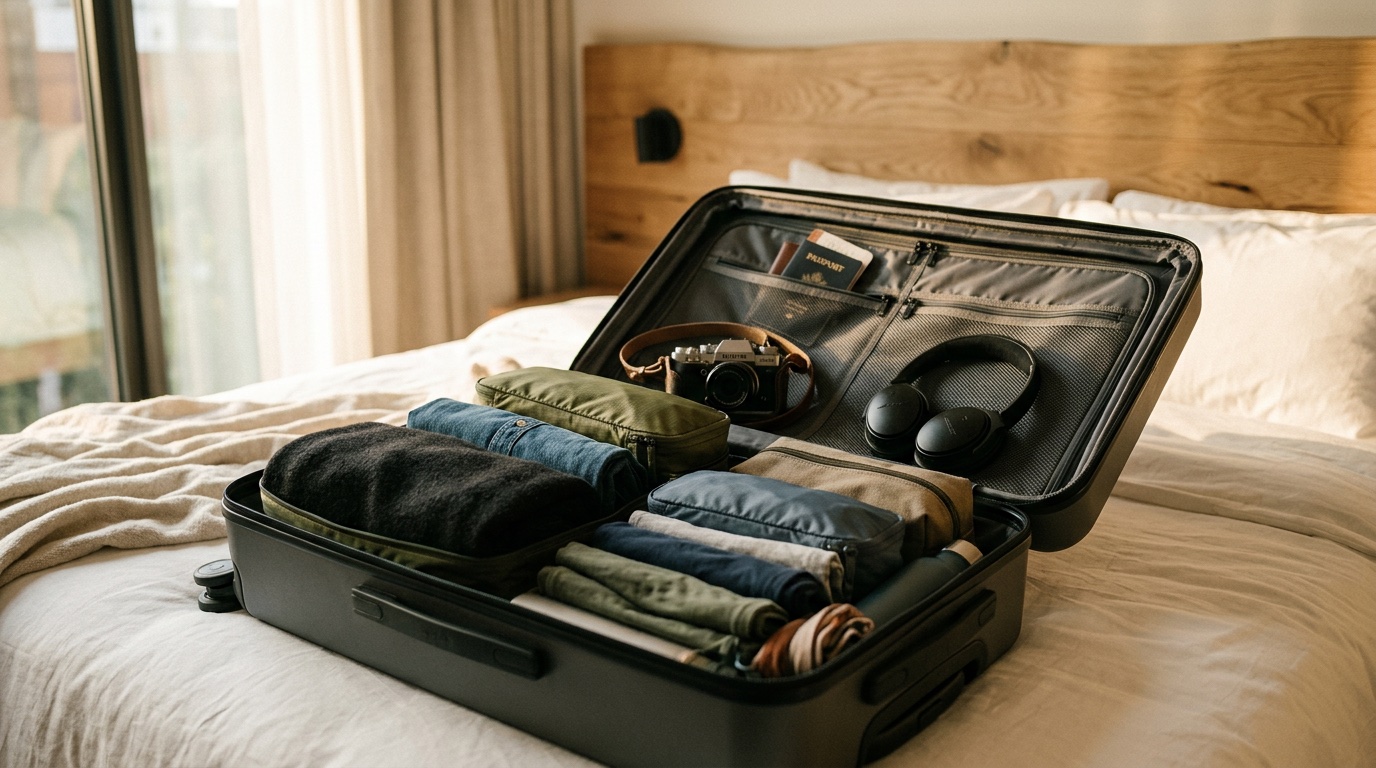
How to Pack When You Don't Know Where You're Going
You have just booked a surprise trip. The flights are locked in, the hotel is arranged, and the countdown has begun — but you still have no idea where you are going. Now comes the question every mystery traveler faces: how on earth do you pack for the unknown?
The good news is that packing for a surprise trip is not as daunting as it sounds. With the right strategy, you can fit everything you need into a single carry-on and arrive ready for anything — from a sun-soaked Mediterranean beach to a cobblestone-lined Northern European city. This guide walks you through a proven approach that thousands of FlyKube travelers use to pack smart, pack light, and pack right.
The Climate Hint: Your Secret Weapon
Before we dive into packing strategies, here is something important that many first-time surprise travelers do not realize: FlyKube provides a climate hint before your trip. When you receive your travel details, you will know the expected temperature range and weather conditions at your destination. This means you are never truly packing blind — you are packing for a general climate zone rather than a specific city.
This climate hint is the foundation of your packing decisions. A hint like "warm and sunny, 25–30°C" tells you to prioritize lightweight clothing and sun protection. A hint like "cool and variable, 8–15°C" signals layers, a waterproof jacket, and closed-toe shoes. To learn more about what information you receive and when, visit our How FlyKube Works page.
The Capsule Wardrobe Approach
The single most effective packing strategy for mystery travel is the capsule wardrobe. This means selecting a small collection of versatile, interchangeable pieces that can be mixed and matched to create multiple outfits. The goal is maximum variety with minimum items.
Here is a proven capsule wardrobe framework for a 3–5 day surprise trip:
- 3 tops: Choose neutral colors (white, black, navy, grey) that pair well together. Include at least one that works for both daytime sightseeing and an evening dinner. Fabrics that resist wrinkles, like merino wool blends or technical travel fabrics, are ideal.
- 2 bottoms: One pair of versatile trousers or dark jeans, plus one lighter option (chinos, a skirt, or shorts depending on the climate hint). Dark colors hide stains and dress up easily.
- 1 dress or smart casual outfit: For a nicer evening out. Choose something that packs flat and does not wrinkle easily.
- 1 lightweight outer layer: A packable jacket that handles wind and light rain is non-negotiable. Look for jackets that compress into their own pocket.
- 1 warm mid-layer: A fleece, thin down jacket, or merino sweater. Even summer destinations can have cool evenings.
- Underwear and socks for each day: These are the one category where you should not try to minimize. Merino wool options dry quickly if you need to hand-wash.
The key principle is that every item should pair with at least two other items in your bag. If something only works with one specific outfit, leave it at home.
Footwear: The Make-or-Break Decision
Shoes are the heaviest and bulkiest items you will pack, so choose wisely. For most surprise trips, two pairs are the sweet spot:
- Comfortable walking shoes: You will likely do a lot of exploring on foot. Choose supportive shoes that you have already broken in — blisters on day one can ruin any trip. Neutral-colored sneakers or walking shoes that do not look overly sporty work well for both sightseeing and casual dining.
- A dressier or weather-appropriate second pair: Depending on the season, this could be sandals for warm weather, ankle boots for cooler climates, or smart flats that transition from day to evening.
Wear your bulkiest pair on the plane to save luggage space. This single trick can free up a surprising amount of room in your bag.
The Layering Strategy
Layering is the mystery traveler's best friend. Instead of packing one heavy coat that might be too warm or one thin shirt that might leave you shivering, build your wardrobe around layers that can be added or removed as conditions change.
The ideal layering system has three levels:
- Base layer: A breathable, moisture-wicking top that sits against your skin. In warm weather, this might be your only top. In cool weather, it keeps you dry under additional layers.
- Mid layer: An insulating piece like a fleece, thin sweater, or light down jacket. This traps heat when it is cold but can be removed and stashed in your bag when temperatures rise.
- Outer layer: A wind-resistant and water-resistant shell jacket. This does not need to be heavy — a lightweight packable rain jacket is often sufficient. The goal is protection from the elements, not warmth (your mid layer handles that).
With this system, you can comfortably handle temperatures ranging from 5°C to 30°C without overpacking.
What NOT to Pack
Knowing what to leave behind is just as important as knowing what to bring. Here are the most common packing mistakes mystery travelers make:
- "Just in case" outfits: That formal dress or suit you might wear if you end up at a fancy restaurant? Leave it. Dressy-casual covers virtually every situation you will encounter in European cities.
- Multiple pairs of jeans: Jeans are heavy and bulky. One pair is enough — they can be worn multiple days and match everything.
- Full-size toiletries: Transfer essentials to travel-size bottles or buy them at your destination. Most European cities have pharmacies and convenience stores everywhere.
- Bulky guidebooks: Your phone and FlyKube's destination guide have everything you need. Save the space and the weight.
- Valuables you would panic about losing: Leave expensive jewelry and sentimental items at home. Travel light, travel free.
- More than two pairs of shoes: Seriously. Two pairs, maximum. Shoes eat luggage space like nothing else.
Tech Essentials for the Modern Mystery Traveler
Technology can make or break your packing efficiency. Here is what to bring:
- Universal power adapter: If your destination is within Europe, a standard EU adapter covers most countries. Compact multi-country adapters are inexpensive and save you from last-minute airport purchases at inflated prices.
- Portable power bank: A 10,000mAh power bank is enough for one to two full phone charges and fits easily in a bag. When you are navigating unfamiliar streets using maps, your battery drains quickly.
- Noise-canceling earbuds or headphones: Essential for flights and long transfers. They also serve as your entertainment system for airport waits.
- Phone with offline maps downloaded: Before you travel, download offline maps for several major European regions. Since you do not know your exact destination yet, covering Western, Southern, and Central Europe ensures you are ready.
- A small daypack: A lightweight, foldable backpack that compresses into its own pouch. Once you arrive, you need something to carry your daily essentials while exploring.
Toiletries: The Minimalist Approach
Toiletries are one of the biggest sources of overpacking. Here is how to keep them lean:
- Multi-purpose products: A tinted moisturizer with SPF replaces foundation, moisturizer, and sunscreen. A 2-in-1 shampoo and body wash cuts another bottle.
- Solid alternatives: Solid shampoo bars, solid deodorant, and solid perfume take up less space, weigh less, and avoid any liquid restrictions on flights.
- The essentials only: Toothbrush, toothpaste, deodorant, sunscreen, any prescription medications, and basic skincare. Everything else can be purchased on arrival if needed.
- Clear zip-lock bag: Keep all liquids in a single transparent bag for quick security screening. If everything you have fits in one bag, you have packed correctly.
If you have questions about what specific items are allowed onboard, check our Help Centre or the guidelines of the airlines we work with.
Season-Specific Packing Variations
While the capsule wardrobe approach works year-round, minor adjustments based on the season make a big difference:
Spring (March – May)
Spring in Europe is unpredictable. Pack for layering above all else. A waterproof jacket is essential as spring showers are common across the continent. Include a light scarf that doubles as sun protection or warmth. Temperatures can swing from 8°C in the morning to 22°C by afternoon, so your three-layer system will be working hard.
Summer (June – August)
Prioritize lightweight, breathable fabrics. Pack swimwear — even if your destination is a city, many European urban areas have rooftop pools, river beaches, or are a short day trip from the coast. A wide-brimmed hat, quality sunglasses, and high-SPF sunscreen are non-negotiable. Still bring a light jacket for air-conditioned restaurants and cooler evenings.
Autumn (September – November)
Autumn is layering season. Earthy tones and darker colors work well aesthetically and are practical for hiding travel wear. A slightly warmer mid-layer (think light down jacket rather than fleece) is advisable. Waterproofing becomes more important as rain increases across Europe in October and November.
Winter (December – February)
Winter is the one season where packing light becomes more challenging, but it is still achievable. Your outer layer should be a proper winter-weight waterproof jacket rather than a lightweight shell. Thermal base layers are a game-changer — they add substantial warmth without bulk. Pack a beanie, gloves, and a warm scarf. Consider packing cubes to compress bulkier winter clothing.
Luggage Size: The Budget Airline Factor
Here is a crucial practical consideration: many European budget airlines have strict cabin baggage limits, typically around 40 × 20 × 25 cm for a personal item or 55 × 40 × 20 cm for a standard carry-on. Checked luggage often costs extra.
Our recommendation is to pack everything into a cabin-size carry-on suitcase or a 40-liter travel backpack. This approach has several advantages:
- No checked baggage fees: You save money that is better spent on experiences at your destination.
- No waiting at baggage claim: You walk off the plane and straight into your adventure.
- No risk of lost luggage: Your bag is always with you.
- Easier mobility: Navigating metros, cobblestone streets, and hotel stairs is vastly easier with a small bag.
If your surprise trip experience includes checked luggage, you will see this in your booking details. If not, embrace the carry-on challenge — it forces you to pack smarter, and most travelers discover they never missed what they left behind.
The Final Checklist
Before you zip up your bag, run through this quick checklist:
- Passport or ID card (check validity — at least 3 months beyond travel dates)
- Boarding pass (digital or printed)
- Travel insurance documentation
- European Health Insurance Card (EHIC) or equivalent
- Phone charger and power bank
- Universal adapter
- Medications (in original packaging for security)
- Small amount of local currency or a travel-friendly debit card
- Copy of booking confirmation
- The FlyKube destination guide (downloaded to your phone)
Packing Is Part of the Adventure
Here is a mindset shift that experienced surprise travelers swear by: packing for the unknown is not a problem to solve — it is part of the fun. The constraints force creativity. The limitations breed flexibility. And the moment you step off the plane with nothing but a carry-on and a sense of wonder, you realize that traveling light is traveling free.
The less you bring, the more room you have — for souvenirs, for spontaneity, and for the unexpected joys that make surprise travel so special.
Frequently Asked Questions
Does FlyKube tell me what climate to pack for?
Yes. FlyKube provides a climate hint before your trip, including expected temperature ranges and weather conditions. This means you always know whether to pack for warm, cold, or variable weather — you just do not know the specific city. Visit our How It Works page for full details on the reveal process.
Can I bring just a carry-on for a surprise trip?
Absolutely. Most FlyKube travelers pack everything into a single carry-on bag. With a capsule wardrobe and smart layering, 3–5 days of outfits fit comfortably. Some experiences include checked luggage, which will be shown in your booking details.
What if I pack for warm weather and end up somewhere cold?
This is unlikely because FlyKube provides a climate hint. However, even without it, a good layering system covers a wide temperature range. And if you arrive and realize you need a warmer sweater, European cities have affordable shopping options everywhere.
Should I pack formal clothing?
For most surprise trips, smart casual is sufficient. Unless you specifically plan to visit a Michelin-starred restaurant, dressy-casual outfits cover virtually every situation in European cities.
What luggage size do budget airlines allow?
Most budget airlines in Europe allow a cabin bag of approximately 55 × 40 × 20 cm. Some only allow a smaller personal item for free. Check our airlines page or the Help Centre for specific airline baggage policies.
Quick answers
Is hold luggage included in the price?
It depends on the fare you select at checkout—verify each segment and baggage rules before you pay.